
In a market of rapidly rising electricity demand and costs, Battery Energy Storage Systems (BESS) offer commercial property owners a new opportunity to generate revenue from underutilized space.
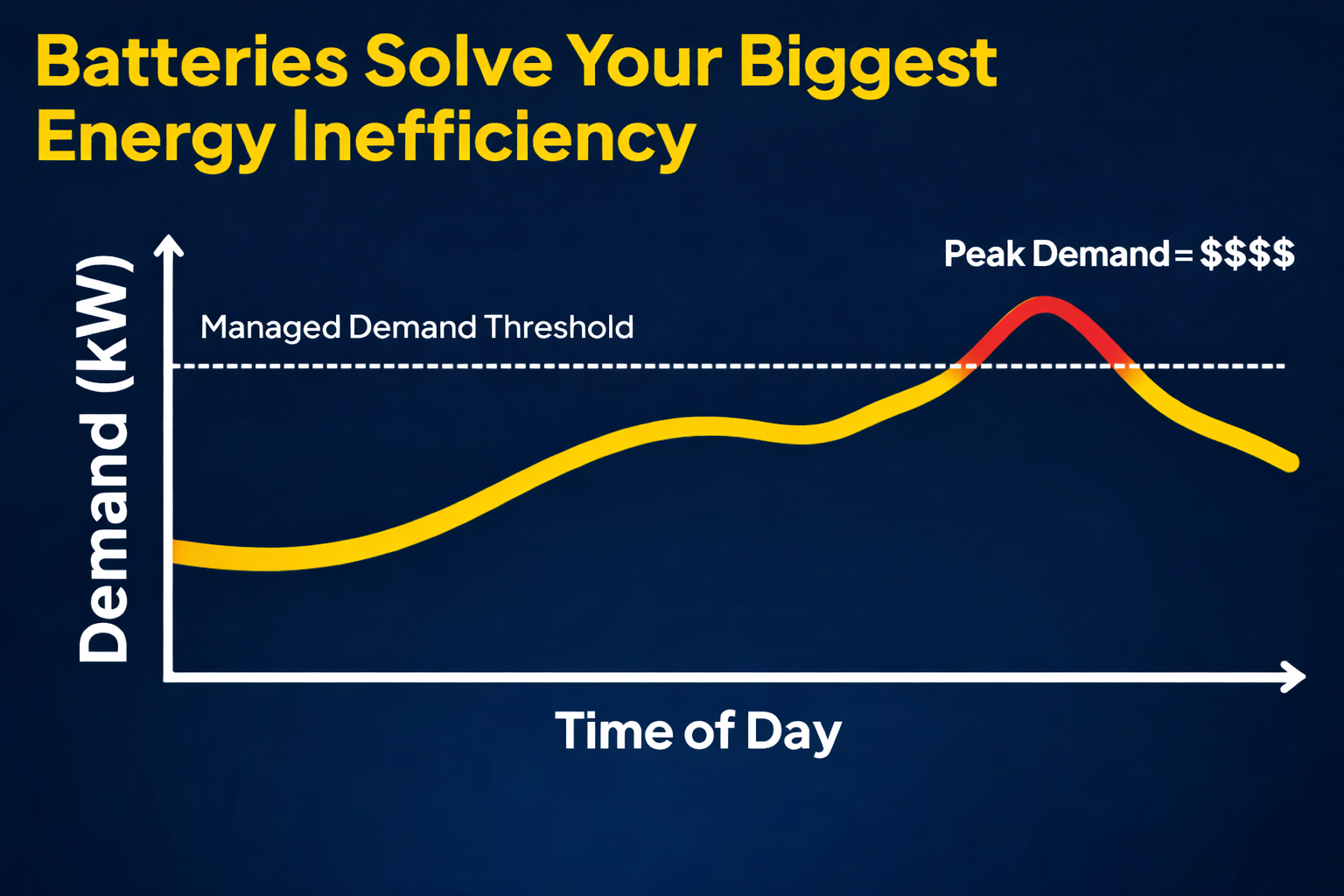
Peak demand charges can make up 50% + of your electric bill.
Lower your peak. Lower your costs.
As electrification, AI infrastructure, and data-heavy operations increase demand on the grid, tenants are paying closer attention to reliability and energy costs.
Access to scalable, dependable power can be the difference between a real estate "deal" or "no deal." Adding batteries today ensures your building remains leasable tomorrow.
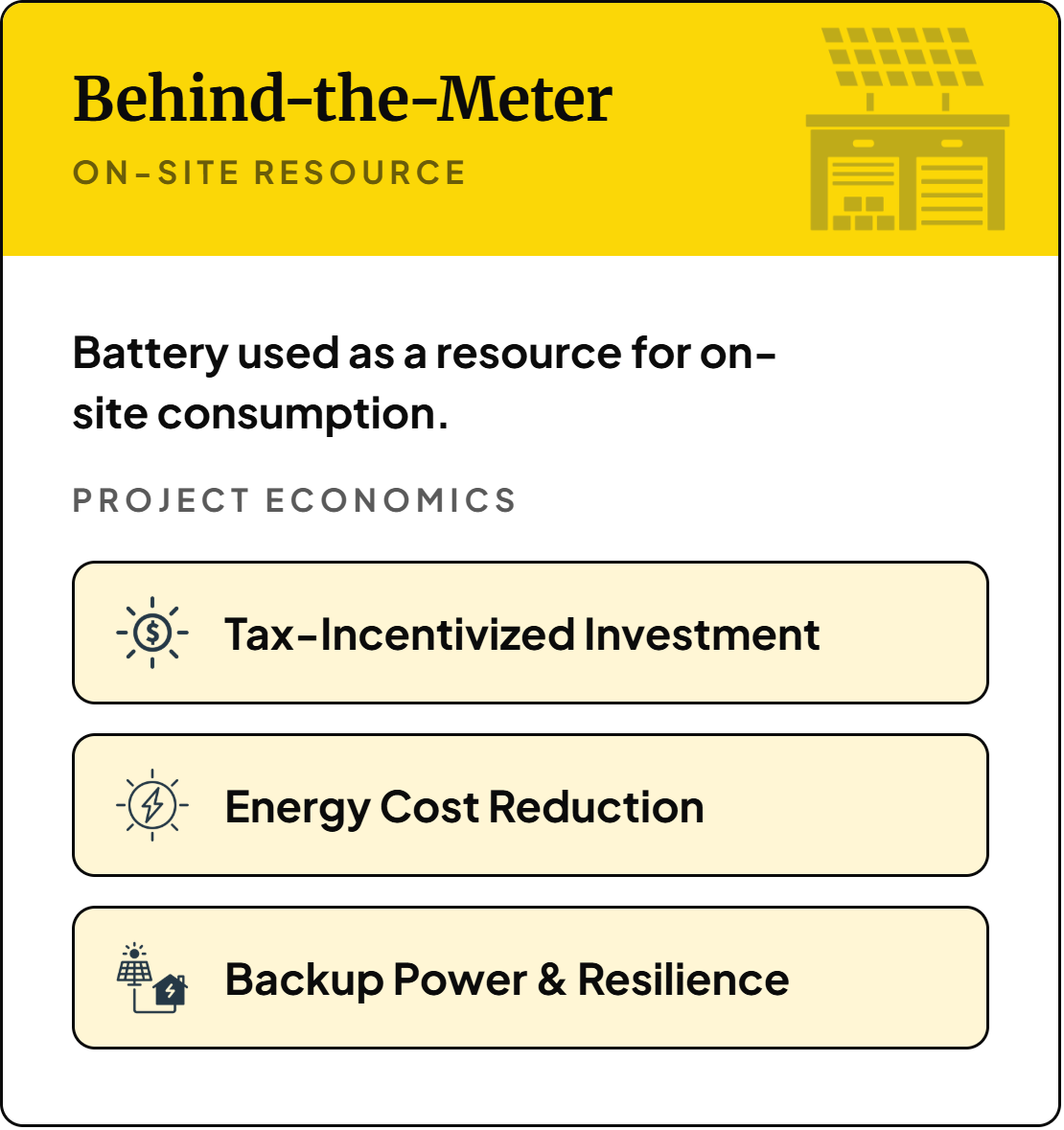
Batteries benefit from a base 30% Federal ITC through 2033, though many sites are eligible for additional "adders" that can push credits even higher.
Brand new, highly-lucrative, incentive programs are being rolled out to encourage battery installations. These programs will decline over time; hitting early is key.
See Current Incentive MapBattery hardware prices have reached a historic low as global manufacturing scale has fully matured, maximizing your project ROI.
Advisory & Strategy
Battery Procurement
Project Management
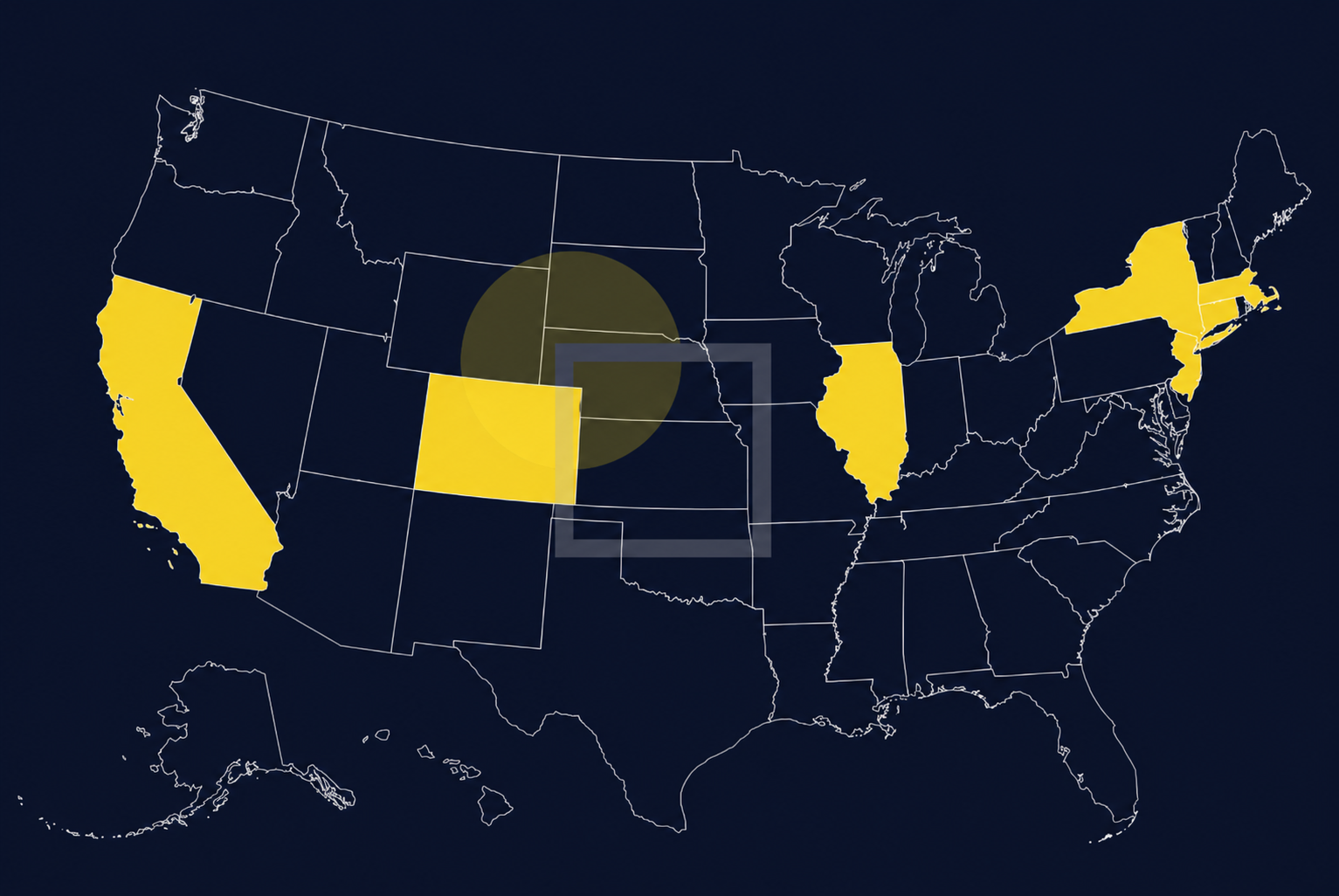
High rates and peak pricing drive strong battery demand-shift value in California.
Feed in tariff program with XCEL Energy on targeted distribution feeder.
Upfront incentives to 50% of equipment costs, plus performance payments.
Mid-2026 program may fund up to 50% of battery costs, plus performance incentives.
High demand charges + SMART 3.0 adders drive strong battery economics.
NJ’s 2026-27 storage program could cover up to 50% of battery equipment costs, becoming one of the nation’s most attractive incentives.
NYC incentives lock in 15 years of guaranteed storage revenue.
Act now to capture incentives at their peak.
Can't find what you're looking for? We're here to help — contact us with your specific queries.
It depends on the battery vendor's equipment footprint, local zoning setback requirements, proximity to the building, and site access. As a general range, FTM systems typically need 5,000–10,000 square feet (roughly 10–40 parking spaces), and BTM systems typically need 1,000–3,000 square feet (roughly 2–10 parking spaces) depending on your usage.
Yes. Standalone storage now qualifies for the federal ITC, and on a demand-charge-heavy tariff the battery pays for itself on bill savings alone. Pairing with rooftop solar usually improves the return, but it is not a prerequisite.
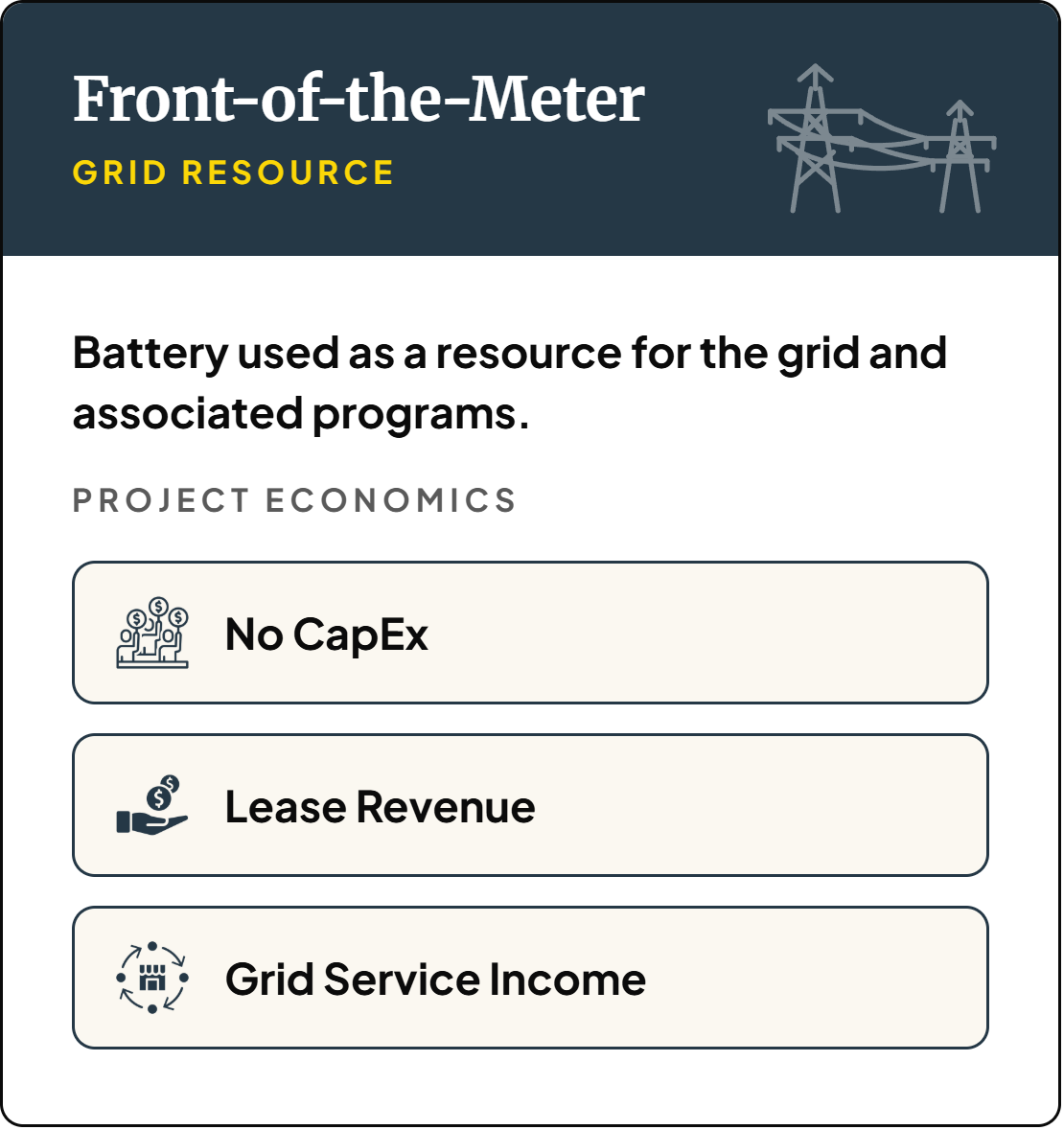
It can. For BTM projects, it depends on market incentives and available revenue streams; in some markets storage adds meaningful value, while in others the economics may be marginal. For FTM projects, storage can provide a separate, incremental revenue stream alongside solar.
Nothing. We are compensated by the developer that wins your project, and our incentive is the same as yours: the strongest offer on the table. You see every bid we receive.
Not necessarily. Most of our clients use third-party ownership: a developer funds, builds and operates the asset, and you receive either a lease payment or a percentage of the savings. Owners who are interested in the investment returns or want the tax benefits can buy it outright instead.
Feasibility and bidding typically run 6–10 weeks. From signed contract to energization is usually 12–24 months, driven mostly by utility interconnection and permitting in your local municipality.
We work with both property owners and tenants. For BTM storage, tenants can participate, although vendors typically look for at least a 10-year commitment. For FTM projects, the lease is generally structured with the property owner.



