Batteries installed on the electrical grid are scaling fast. According to the Energy Information Administration (EIA), battery storage capacity on the grid has averaged 70% growth over the last three years.
A battery doesn't have just one revenue stream.
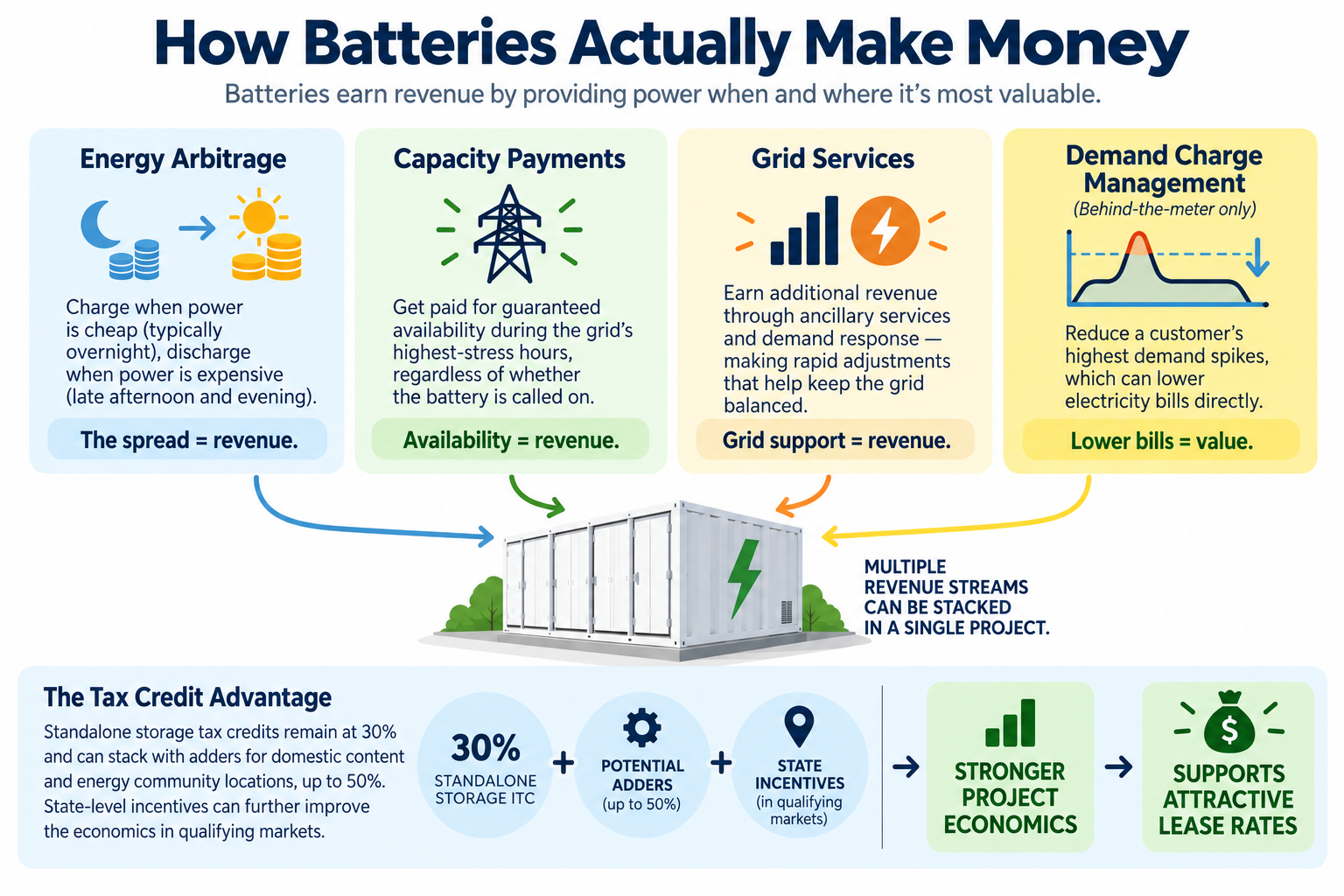
Depending on the market, location and how the system is structured, a commercial battery can generate value by buying and storing power when it's cheap, selling or discharging it when prices rise, getting paid to be available when the grid is strained, providing grid services, reducing demand charges and capturing federal and state incentives.
The real opportunity is in the revenue stack, identifying which of those sources of value a particular battery can capture, and when.
And for commercial real estate owners, you don't necessarily have to own the battery to participate in the economics.
Most commercial real estate owners and large energy users have likely noticed an uptick in developers reaching out to lease land for battery projects, or to offer behind-the-meter battery solutions that reduce on-site energy bills.
There's a reason for that. As we touched on briefly in our Batteries Are Here article, four major trends have collided to push batteries to the forefront:
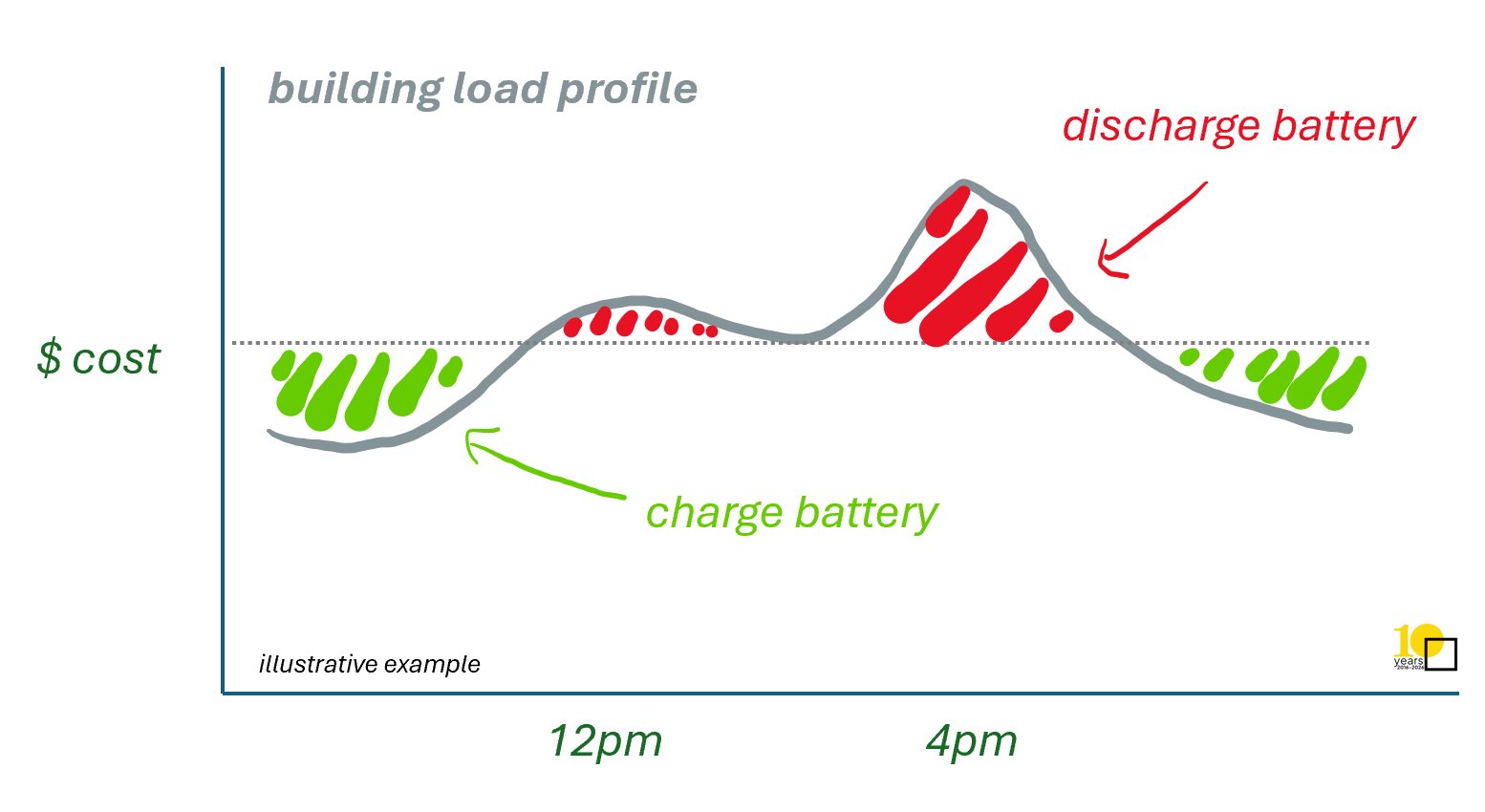
The concept is simple. Batteries charge when the grid prices are low (typically at night), and discharge when prices are high (typically afternoons and evenings).
This shift of energy allows the grid to be used more efficiently. And it's profitable for the battery owner and advantageous to consumers, since it improves grid utilization and reduces overall
energy costs.
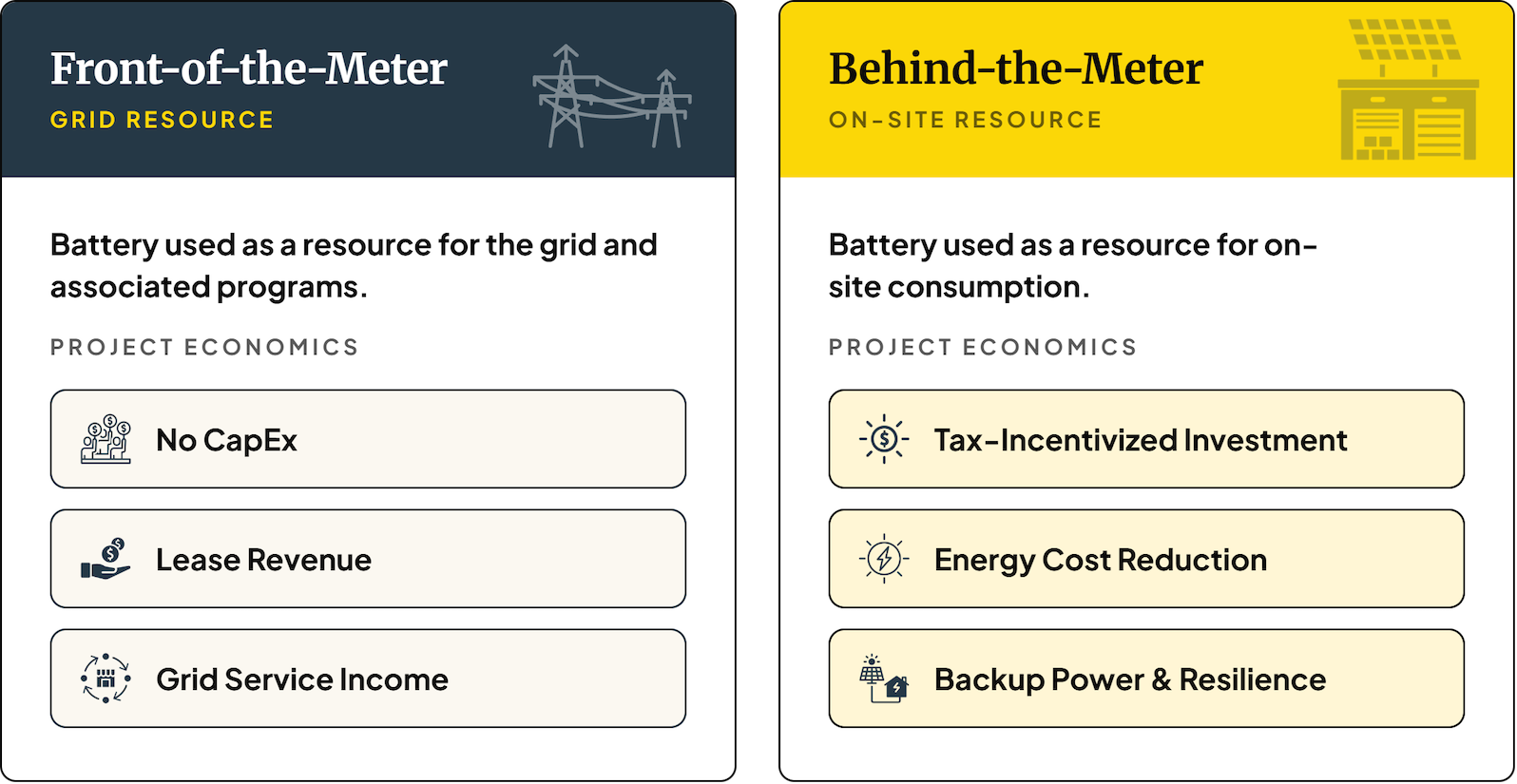
For commercial real estate owners, battery projects generally fall into two categories: front-of-the-meter (FTM) and behind-the-meter (BTM). Both can create value, but they work, and generate returns for property owners, in different ways.
As mentioned above, batteries earn revenue in several of ways:
Not every revenue stream can be captured at the same time. Battery operators continually decide when the asset creates the most value: charging, discharging, or holding capacity in reserve for a higher-value opportunity. That decision must be balanced against degradation, since the more a battery is used, the less capacity it retains over time.
Battery storage can create real value for commercial real estate right now.
The opportunity depends on the property, its location, energy profile, and available incentives. The first step is determining whether your property has the right ingredients for a viable BESS project, and how to capture the greatest value from it.
For commercial real estate owners, entirely new revenue opportunities are emerging across portfolios, and the properties that move first capture the most value. The question isn't whether battery storage makes sense, it's whether your properties are positioned to capture it. Reach out to SolarKal at Inquiries@SolarKal.com to find out.
Introducing the SolarKal Battery Content Series
Battery storage is the most important next step in the evolution of commercial energy.
As electricity demand rises, grid constraints tighten and energy markets become more complex, batteries are quickly becoming a critical tool for reducing costs, improving resiliency, and unlocking new value at the property level.
We’ve already covered why batteries are becoming required infrastructure in Batteries are Here and The Valuation Boost of Solar + Storage to CRE in 2026. Over the next few months, SolarKal’s new Battery Content Series will cover everything from the economics, to siting, system design, and more.