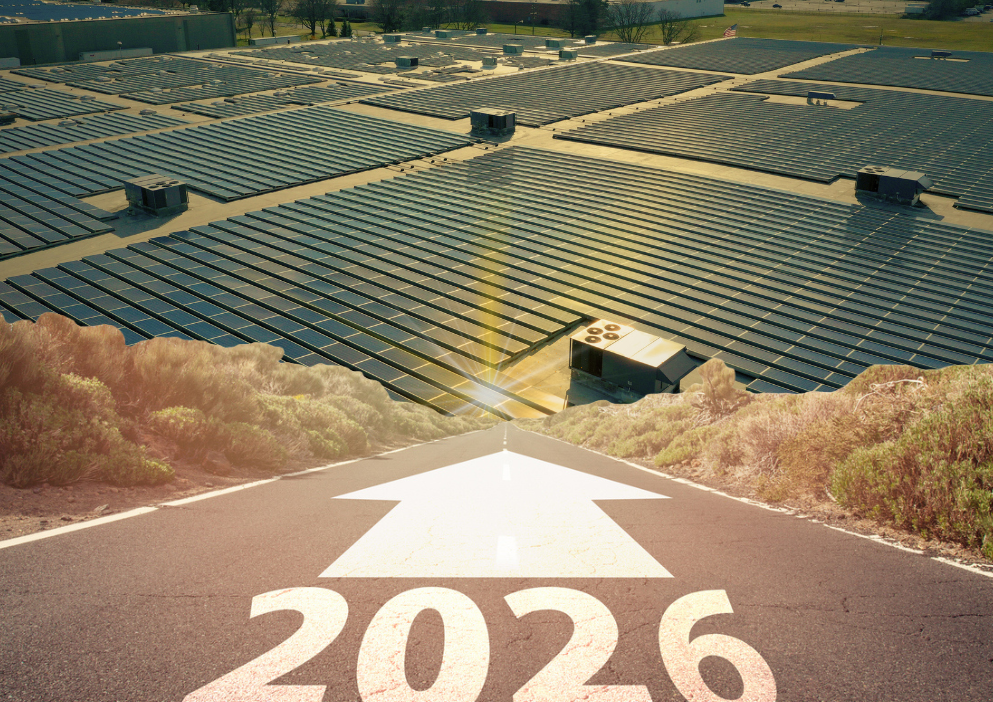
As the commercial solar market moves into 2026, one thing is clear: Decision-making has become less forgiving.
Policy shifts now arrive midcycle. Incentives come with hard cliffs. Tariffs reshape sourcing economics with little warning. Storage opportunities vary dramatically by market and utility. What was once a relatively linear analysis is now a moving target. In this environment, success won’t belong to those waiting for perfect forecasts. It will belong to owners prepared to act as conditions change.
A decade ago, having a solar advisor was helpful. In 2026, it’s increasingly essential. Not because solar is new but because the margin for error is smaller.
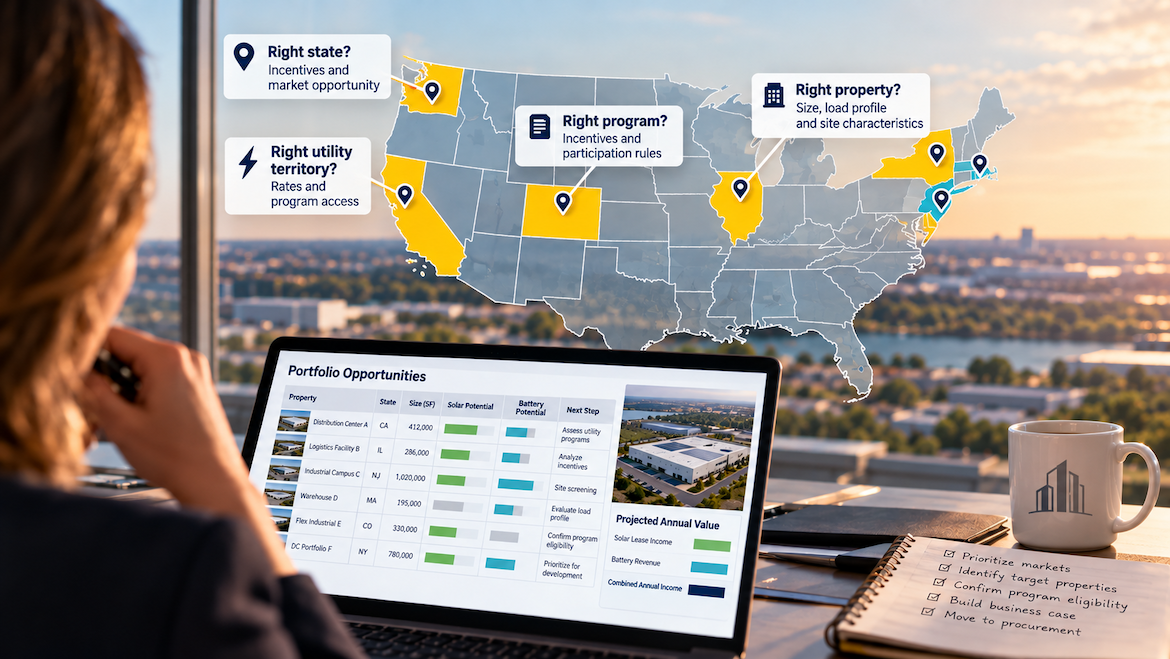
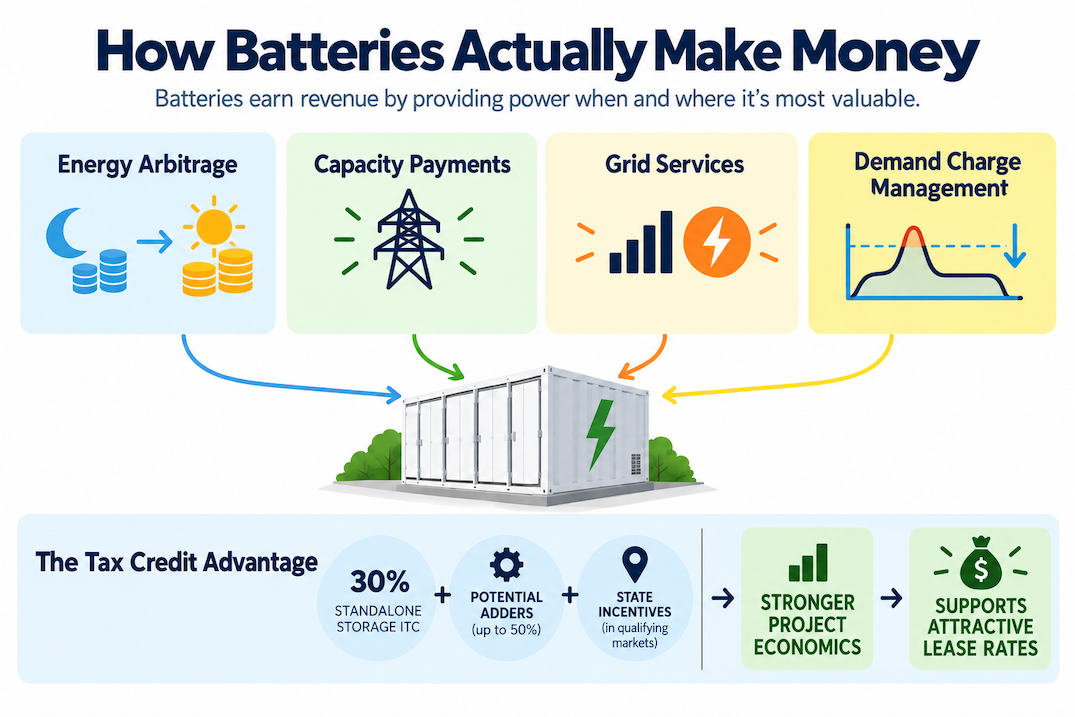
Commercial real estate owners are no longer evaluating projects in isolation. They’re navigating time-bound incentives, evolving state programs, tariff volatility, and emerging storage economics, often all at once. The cost of a wrong assumption today isn’t marginal. It shows up as delayed projects, missed windows, or revenue left on the table.
Despite the complexity, 2026 is shaping up to be an opportunity-rich year for owners who move decisively.
These opportunities are real, but they’re easy to miss without a clear view of how policy, pricing, incentives, and market behavior intersect.
What the market taught us in 2025 is that perspective is informed by experience. Last year, we published a set of predictions about where the solar market was headed. Some held. Many didn’t. And that outcome is instructive.
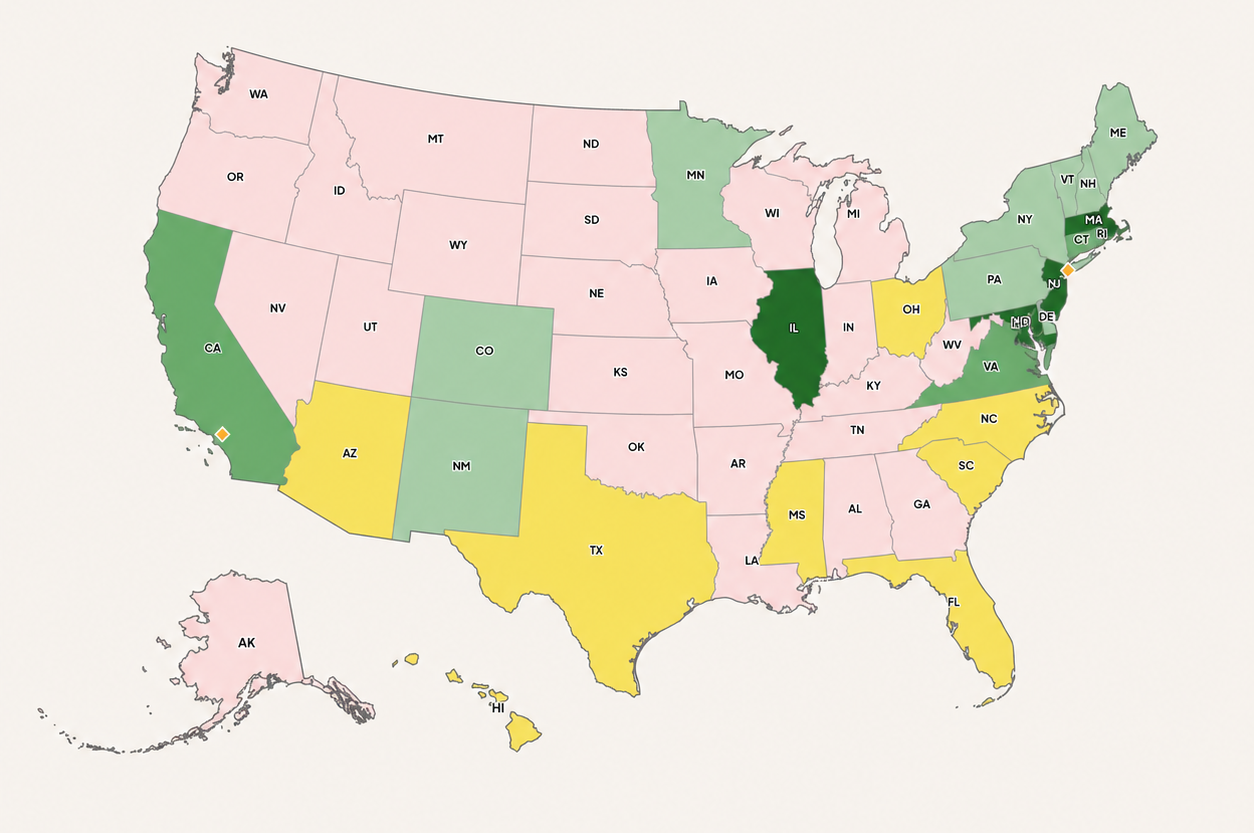
2025 didn’t reward clean forecasting. Policy shifted midstream. Tariffs whipsawed. Some segments surged while others stalled. National averages masked wide state-by-state divergence.
Volatility beat precision forecasting — but the underlying trends still mattered.
We revisited our 2024 predictions for 2025 to assess what held, what didn’t, and why. The results reinforce a simpletruth: Markets don’t move in straight lines, but experience still matters.
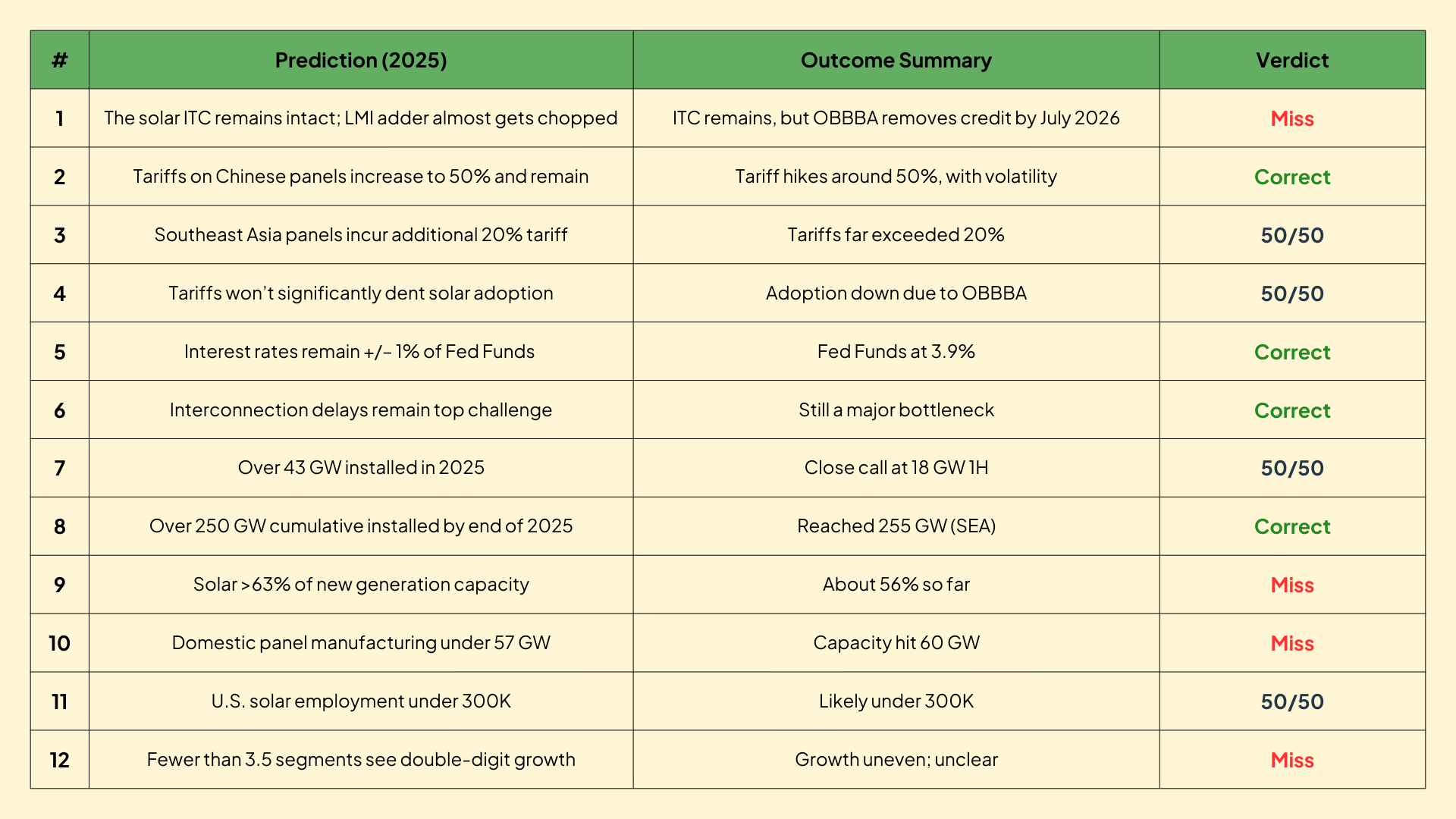
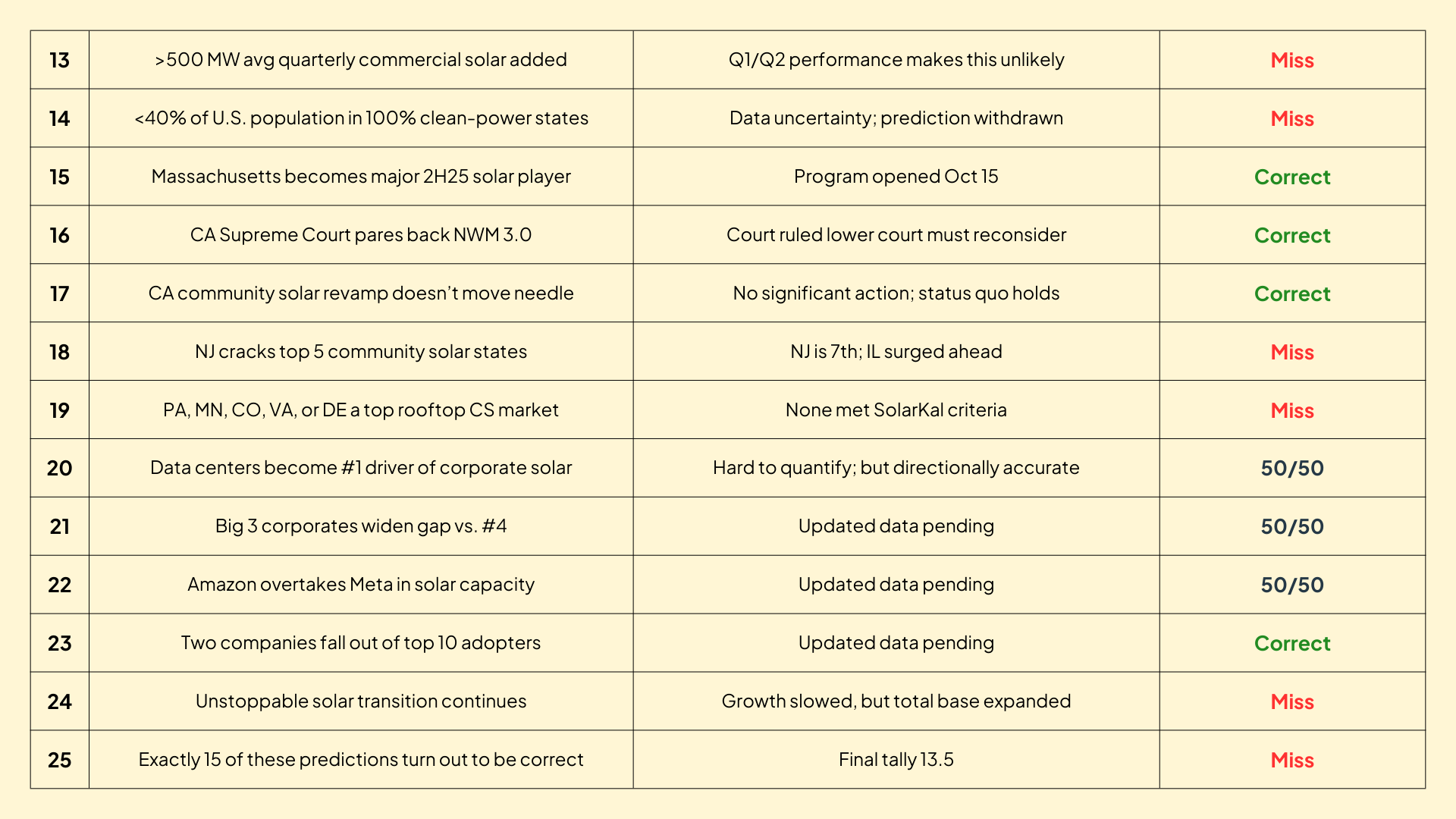
The lesson heading into 2026 is straightforward: Waiting for certainty is costly. The owners who performed best in 2025 weren’t those with perfect forecasts. They were the ones with partners who could adapt, recalibrate, and execute as conditions changed. In today’s market, commercial solar success isn’t about predicting the future. It’s about being prepared to act when it shifts. How do you do that? Get in touch with your SolarKal advisor today.