When I launched SolarKal 10 years ago, I didn’t have a clear blueprint, or the experience, to build a company. I was focused on solving a problem I kept running into. What began as a practical idea became a decade-long process of learning how to build from scratch: navigating uncertainty, managing cash when nothing is predictable, hiring and retaining people better than you, and adapting as both the business and the market evolve. The industry changed significantly over that time, but the more meaningful shift was personal - moving from doing the work to building the system, and from founder to CEO.
In celebration of our 10th anniversary milestone, here are 10 lessons I’ve learned so far.
1. Start with the customer problem, not the company idea.
SolarKal did not start with a clear plan to build a company. It started with a strong desire to solve a problem.
One of the first things I learned in commercial solar was that the hardest part isn’t the technology but rather the process. Early on, we worked with a building owner who genuinely wanted solar. But they were staring at proposals from multiple developers that were impossible to compare. Different assumptions. Different structures. Different promises. The owner finally said something that stuck with me:
"I just want someone on my side."
That gap led to a simple idea: Instead of representing one developer, represent the owner. I then tested the business premise. I walked into a New Jersey business owner’s office, carrying five, 20-plus-page solar proposals. Placing them on the desk, I said, “You can have these or three slides, with a recommendation.” That was our first big client.
SolarKal began as a way to help property owners find the right solar solution, regardless of which developer built it.
2. Early visions rarely survive contact with reality.
The original concept for SolarKal looked very different from the company today.
The idea was to build something similar to a real estate brokerage: a distributed network of solar advisors trained to originate opportunities, with SolarKal operating as the central platform behind them.
In practice, the business evolved in a completely different direction. The early years were less about building a scalable model and more about helping individual clients solve complicated problems.
3. Infrastructure businesses move slowly even when the market moves fast.
Solar is an infrastructure business. Plan for the lag between investment and revenue.
Projects take years to develop, permit, finance, and build. Revenue follows that timeline. For a startup trying to grow quickly, that creates a constant tension: You need to invest in people and growth today while the revenue from projects may arrive years later.
Managing that mismatch became one of the core challenges of building the company.
4. Cash flow discipline is existential.
Many of the moments when the company felt most fragile were tied to cash flow. Projects get delayed. Revenue moves. People come and go. Deals that seem certain fall apart.
Over time you learn that building a company is often about holding the puzzle together during those moments when it feels like everything might come apart. Solar projects rarely move on a perfect timeline. Build in more buffers than you think you’ll need.
5. Capital strategy is a core leadership skill.
Growing SolarKal required learning how to finance the company.
Over the years we relied on many different sources: organic revenue, grants, debt, and eventually a private equity investment. Each stage requires different tools. Understanding how to combine them while maintaining long-term control of the company became a critical part of the job.
6. Enterprise sales is about listening.
In the early days I thought sales meant presenting the best solution.
Over time I learned the opposite.
In enterprise sales, especially with institutional real estate owners, the key skill is listening. Clients rarely care about your product. They care about their own problems. The job is to understand those problems deeply and design a solution around them. Make listening your competitive advantage.
7. The industry matured dramatically and expectations have risen accordingly.
Ten years ago, many conversations started with basic questions:
What is solar?
How does it work?
Is it reliable?
Today those conversations look very different.
Most institutional real estate owners already understand solar. The question now is not whether to do it but how to do it well. That shift has fundamentally changed the market. The value now is in execution.
8. What got you here won’t get you there. Founders eventually have to become CEOs.
In the early years, my role was largely technical and client-focused: structuring projects, running RFPs, and helping clients design solar programs.
Over time the role changed.
Building the company meant focusing less on projects and more on people: leadership, hiring, culture, strategy, and vision. That transition, from founder to CEO, is one of the biggest learning curves in building a company.
9. Great teams outperform large teams.
Early on I was told that team building would be the most important part of the job. At the time it felt secondary to finding deals and revenue.
In reality, it proved to be central.
A small group of exceptional people can outperform a much larger team. Strong teams also attract other strong people. Maintaining that culture becomes one of the CEO’s most important responsibilities. My tip: Hire fewer but better.
10. Build your advisor bench early!
One of the most valuable lessons has been the importance of surrounding yourself with experienced advisors.
SolarKal has benefited enormously from advisors across real estate, solar development, finance, and sales. Their perspective has helped us avoid mistakes and navigate key decisions. Building a strong advisory network is one of the highest leverage things a founder can do.
Looking Ahead: The Next Decade
The first 10 years were about building the foundation: the team, the platform, the client base, and the market credibility.
The next decade will be about scale.
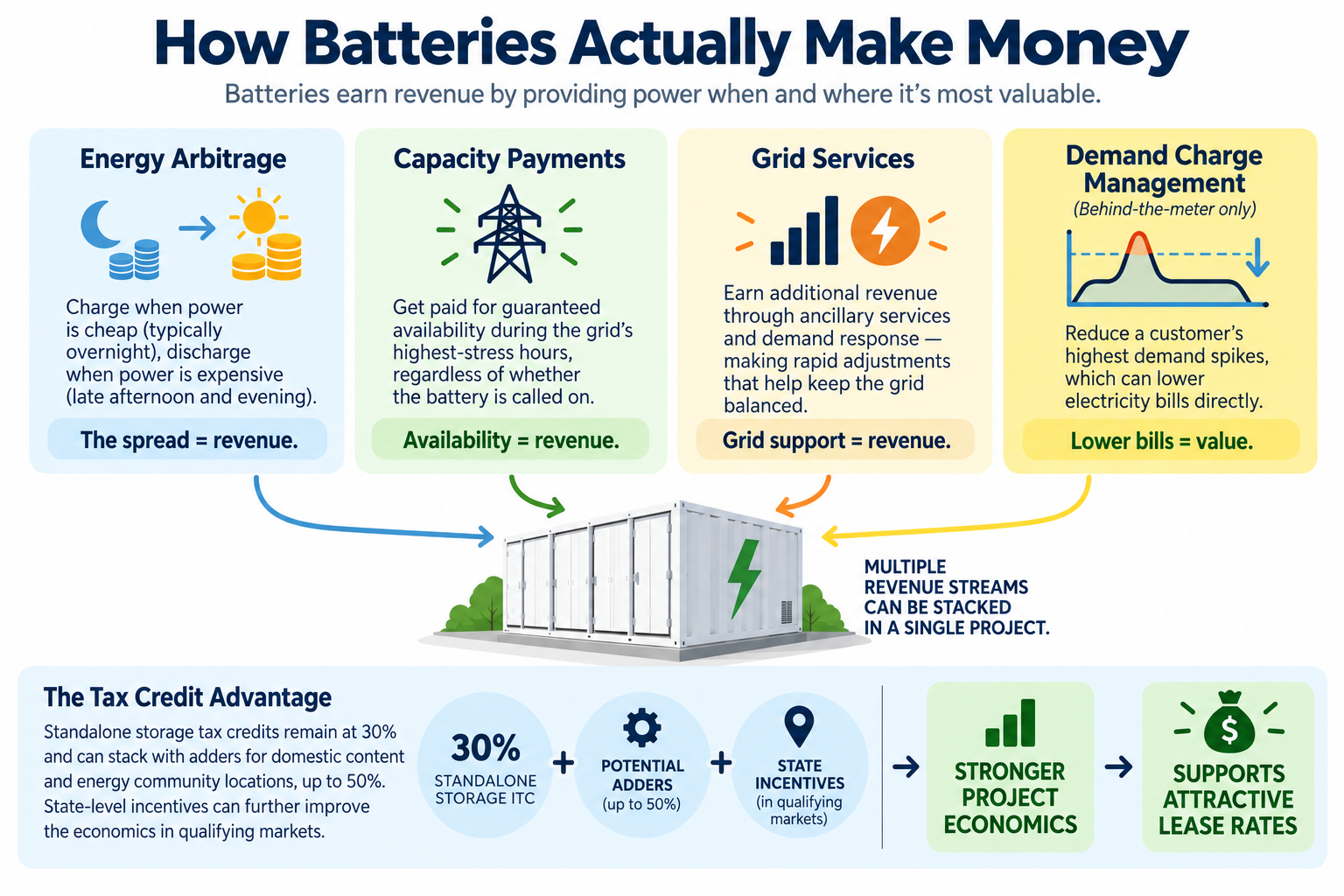
The energy landscape is changing rapidly. Solar adoption continues to grow, and the integration of batteries and other distributed energy solutions will reshape how buildings consume and manage power.
With the team, clients, investors, and advisors now in place, SolarKal is positioned to help real estate owners navigate that transition.
And, for me personally, the next 10 years will be about learning how to lead a company at a much larger scale than when we started.
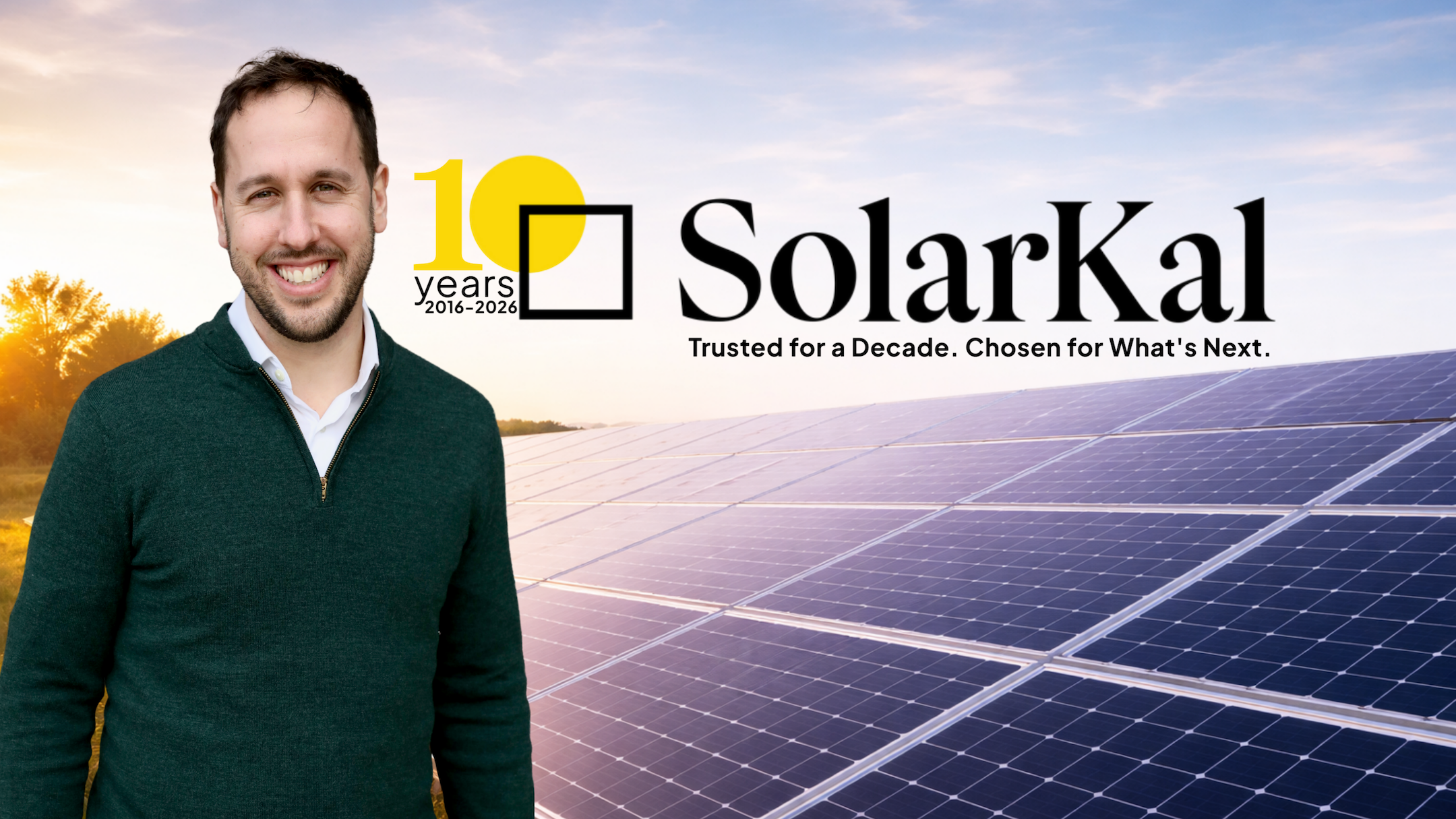
That’s why, as we mark our 10th anniversary, our theme is: “Trusted for a Decade. Chosen for What’s Next.”