For 20 years the solar industry has been built around incentives. Tax credits, state programs, and depreciation benefits have helped shape solar and often determine if commercial property owners moved forward with a project or not.
But as many of those incentives evolve and tax credits sunset, early signals across the market indicate something unexpected is happening - commercial solar activity is not slowing down. In fact, for the fifth year in a row solar is the top source of new U.S. power according to a recent SEIA Report.
This is not the outcome that many were expecting. The assumption was straightforward: as incentives step down, particularly those around the Investment Tax Credit (ITC), activity will slow, pricing will shift, and solar projects will become harder to justify.
But that’s not what we’re seeing in data from our commercial solar marketplace. In fact, project volume has more than doubled year over year, and across the hundreds of projects we’re advising on today, lease rates are holding steady. Solar Developers remain active and competitive.
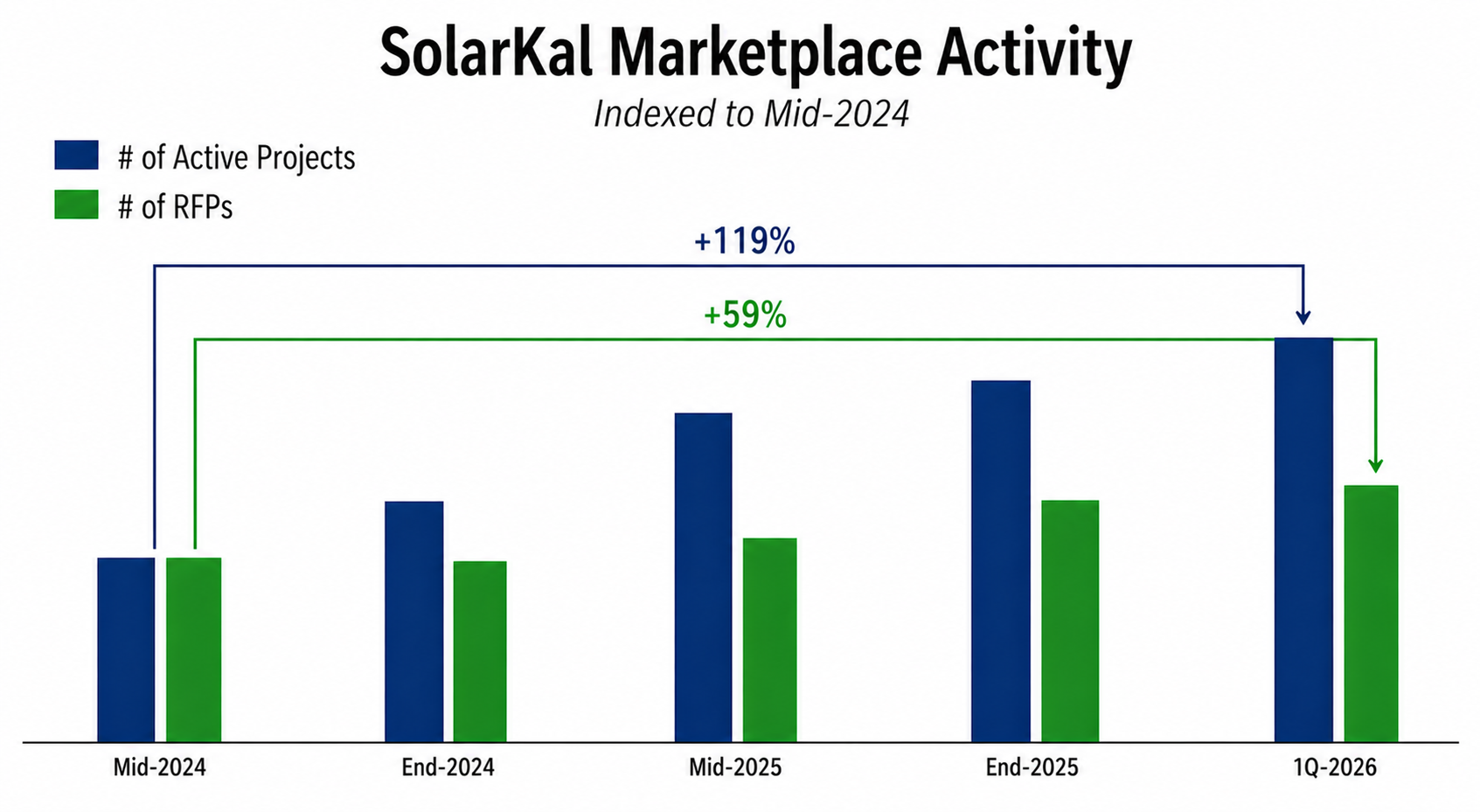
That momentum has not stalled in early 2026. Overall activity remains elevated, with new RFPs continuing to enter the market at a steady pace.
Some of this acceleration is undoubtedly tied to timing. As incentive structures evolve and safe harbor strategies remain available, many owners are moving to secure economics under current incentive levels.
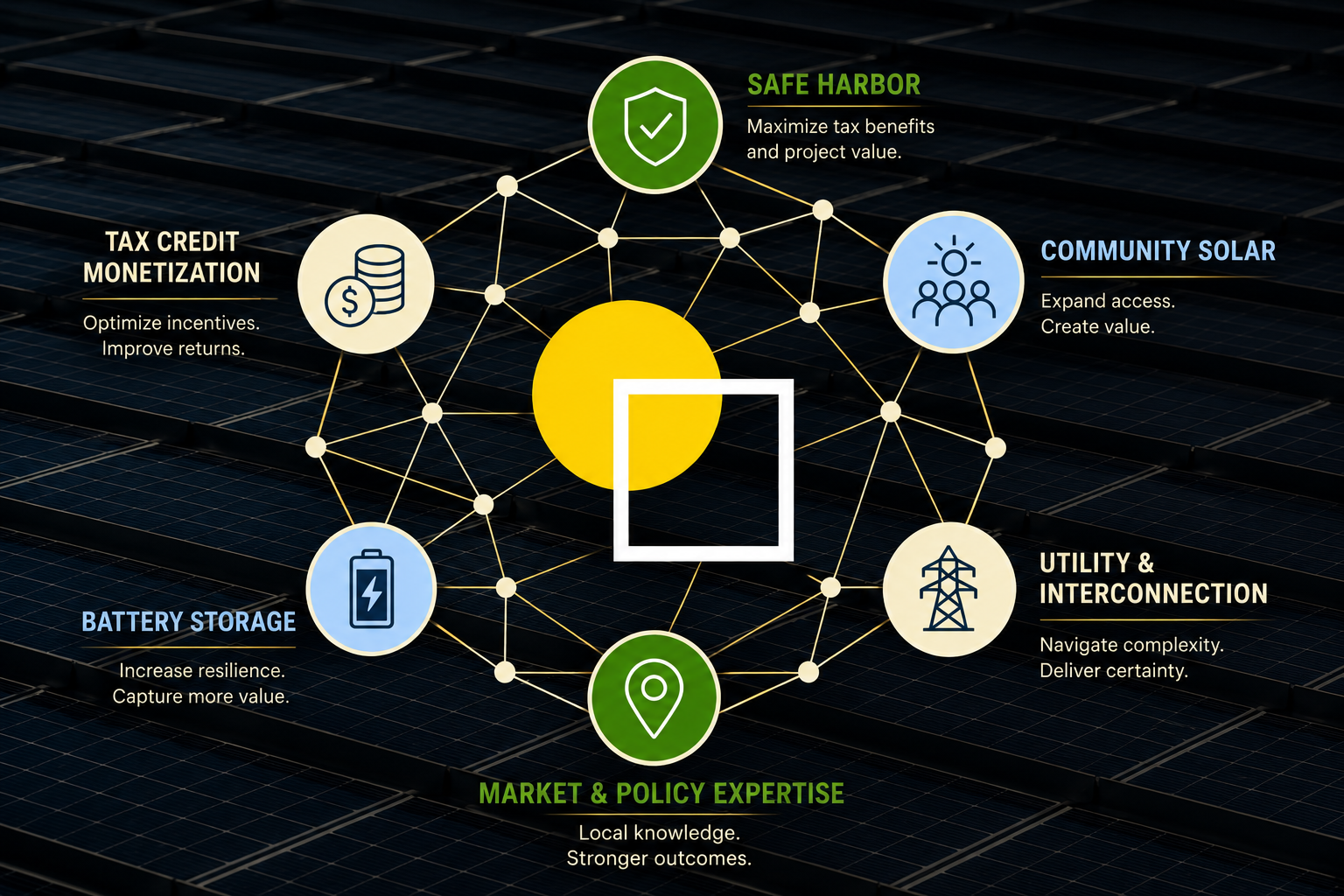
In fact, SolarKal is working especially closely with solar developers who have the financial capabilities to secure the federal tax credit. There are companies out there with ITC-eligible solar equipment, and they’re ready to deploy it. Our job is to match those developers with real estate owners and strong solar projects.
But that’s only part of the picture.
Energy’s role in commercial real estate is changing rapidly. What was once a passive expense is now boosting NOI, meeting tenants’ growing demands for power and reliability, and supporting a property’s long-term competitiveness.
Today’s underlying economics are changing in ways that are hard to ignore:
The industry spent years chasing incentives. That’s no longer the point. The economics stand on their own, with or without government policy.
Building owners without an energy strategy aren’t just leaving money on the roof. They’re accumulating risk.
Will the shift away from incentive-driven adoption permanently change how solar is evaluated in commercial real estate? No one has a crystal ball. However, our marketplace gives us a ground-level view of real demand, and we’re not seeing solar fall off a cliff. Quite the opposite with record growth.
Incentives still matter. But they are no longer what’s driving the market. Solar is increasingly being bought and sold on operational and financial fundamentals, and that makes the underlying case for it stronger, not weaker. A market built on economics is a market built to last.